
The latest circular from BSE that sought to cap the price movement of select scrips, especially the mid-, small-cap segments, traded on the exchange is not without a reason. A quick calendar year-to-date price check on the stocks from the categories put under 'Add-on Price Band Framework' by the BSE reveals a total of 210 stocks have seen their market price more than double. Among individual stocks, SC Agrotech, Adinath Textiles, Waaree Renewable Technologies, Steel Strips Infrastructure, Unistar Multimedia, Texel Industries, Raja Bahadur International and Hindustan Everest Tools from the BSE's X and XT group have rallied over 500 per cent during this period. Topping the charts is Gita Renewable Energy, which has zoomed 3,964 per cent to Rs 272.35 now from Rs 6.7 as on December 31, 2020.

The retail frenzy over initial public offers (IPOs) seen over the past few months is not without reason. Over the past two years, 61 companies have tapped the primary market and raised funds via IPOs. Of these, 24 companies (nearly 39 per cent companies) have more than doubled at the bourses with Happiest Minds, IndiaMart Intermesh, Indian Railway Catering and Tourism Corporation (IRCTC), Affle India and Route Mobile surging 468 per cent to 722 per cent since their listing date till now. Retail participation in the equity market, according to analysts, has just reached an inflection point due to the low interest rate regime amid lack of investment-worthy avenues that can generate a good return for investors.

'Waiting for a market correction and optimising entry time in the markets will be akin to missing the woods for the trees.'

'Over the next two quarters, markets will be guided by observing the earnings resilience of corporates during the second lockdown, progress of the monsoon and the damage, if any, to rural spending power due to the second wave.'

From Covid-19 essentials, such as Vitamin C supplements and thermometers, to bicycles, laptops, and personal weighing scales, demand for certain items galloped during last financial year as the pandemic altered what Indians used on a day-to-day basis. Imports of outdoor sports equipment, handbags for women, and dentures, among others, plummeted. With outdoor activities coming to a halt last year and schools functioning virtually, imports of sports goods witnessed a decline, while inbound shipments of laptops and battery chargers saw a sharp uptick, according to the import data for the financial year 2020-21.

'It is less dependent on imported capital.'
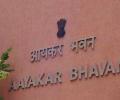
Amid economic uncertainties owing to the pandemic, the government's key revenue agency, the Income Tax Department, has close to 400 vacancies at commissioner level and above, affecting its functioning. Seventy-three of the 91 chief commissioner positions are lying vacant, with some for more than a year. Chief commissioner is the second-highest post in the department, below principal chief commissioner, which is at par with secretary in a ministry.

Zomato's initial public offer (IPO) is scheduled to open for subscription on July 14 and is priced between Rs 72 - 74 per share. At the upper end of the price band of the offering, the company aims to raise Rs 9,350 crore. Most analysts have given a 'subscribe' rating to the issue for listing gains.

India conceding ground to bring only top 100 digital companies like Google, Facebook, and Netflix into the global taxation pact may have revenue implications. This will mean that New Delhi will have to withdraw the contentious 2 per cent equalisation levy on e-commerce operators by 2023. This may have revenue implications for India, experts pointed out, as the equalisation levy has a much lower annual revenue threshold of Rs 2 crore (euro 0.2 million) as against euro 20 billion agreed by 130 countries at the Organization for Economic Cooperation and Development (OECD). India, along with other developing countries, was pitching for at least euro 1 billion threshold to cover at least 5,000 global entities. India collected Rs 2,057 crore from the equalisation levy in 2020-21, an 85 per cent growth over Rs 1,136 crore in the previous fiscal.

'From the tiniest to mid-level organisations and even some at the lower end of the large-scale ones would say that computerisation and the extensive documentation and regulatory requirements for GST have made the compliance process worse in many cases.'

As the second wave of the pandemic ebbs and the daily caseload falls, the struggles of the urban poor have come into focus. Many have suffered income and job losses after two successive waves. The second wave, in particular, has seen the poor being hit hard on account of lack of medical and financial help. For the fast-moving consumer goods (FMCG) companies this has meant that an important segment is under severe distress.

Sanjiv Mehta, chairman of the country's largest consumer goods company, HUL, believes that the second wave of the Covid-19 pandemic between April and June this year has been a mere pause in India's consumption story, and that it will not change the country's overall growth trajectory. India is poised for growth, especially in the fast-moving consumer goods (FMCG) sector, Mehta told shareholders at the company's annual general meeting on Tuesday. The signs of recovery are becoming evident with many states lifting lockdown restrictions in recent weeks.

Covid-19 pandemic that brought life to a near standstill in 2020 has left Indian adults poorer by 6.1 per cent in 2020, suggests the Credit Suisse Global Wealth Report 2021. Wealth per Indian adult in 2020, according to the report, dropped to $14,252 by 2020-end compared to pre-pandemic levels. On a cumulative basis, Credit Suisse estimates the drop in the wealth of Indian adults at $594 billion.

Colgate-Palmolive India is placing greater emphasis on freshness, whitening, therapeutic, and family toothpastes, as rivals such as Dabur and Patanjali dominate the growing naturals segment of the market. Once under 5 per cent of the Rs 10,000-crore domestic toothpaste market, the naturals segment, which includes ayurvedic and herbal variants, is now 25-30 per cent of the market, industry executives said. Growth rates of the naturals segment are estimated to be in the region of 8-9 per cent in volume terms. In value terms, the growth rate for naturals is around 10-12 per cent, sector experts said.

Advertising on television continued to show momentum in May despite the surge in Covid-19 infections and the temporary suspension of the Indian Premier League (IPL), a high-impact television property. The data shared by the Broadcast Audience Research Council of India (BARC) on Thursday shows that advertising volumes in May were up 64 per cent year-on-year. However, there was a marginal dip sequentially, that is, in comparison to April 2021, when advertising had touched a record high owing to the start of the summer season and the return of the IPL to India after being held in the United Arab Emirates in 2020.

72 per cent of the revenue of Indian firms (India Inc) is derived from the domestic / home market - the sixth highest in percentage terms in the emerging market (EM) and the Asian region, said a recent report by Morgan Stanley. The balance, according to the report titled 'Global Exposure Guide 2021' co-authored by analysts led by Jonathan F Garner, their chief Asia and emerging market strategist, is split between the developed markets (DMs) and other EMs. The report is based on an analysis of 3,300 companies globally that have revenue exposure in 17 different regions.

'While most companies were bullish before the second wave of double-digit sales growth in FY22, that may not be the case now.'

'For equities, inflation trending upwards but within the range of expectations can actually be a big positive as it helps earnings and may shift flows from bonds to equities.'

The Competition Commission of India (CCI) on Tuesday said that the proposed additional stake buy in United Breweries (UB) by Dutch major Heineken does not raise any competition concerns, effectively clearing the deal. In its order, the CCI said, "It is submitted that the proposed transaction does not give rise to competition concerns regardless of delineation of the relevant market for the purpose of this filing." UB is the country's largest beer company, while Heineken is the world's second-largest brewer after Anheuser-Busch (AB) InBev.

Despite near-term headwinds of rising input costs and the possibility of lower demand for products as Covid dented rural & urban India, and impacts both production & consumption, analysts remain bullish on stocks of fast moving consumer goods (FMCG) companies and expect the index to relatively outperform its peers in the second half of fiscal 2021-22 (FY22). In the past one year, prices of key commodities such as groundnut oil, mustard oil, Vanaspati, soya oil, sunflower oil and palm oil have shot up in the range of 20 per cent to 60 per cent, data show. The FMCG sector macros in this backdrop, according to analysts, have further deteriorated because of weakness in consumer demand and likely margin pressure due to elevated crude oil, palm oil and global food prices.
 © 2026 Rediff.com - Advertise with us - Disclaimer - Privacy Policy - Sitemap - Feedback - About us - Terms of use - Grievances